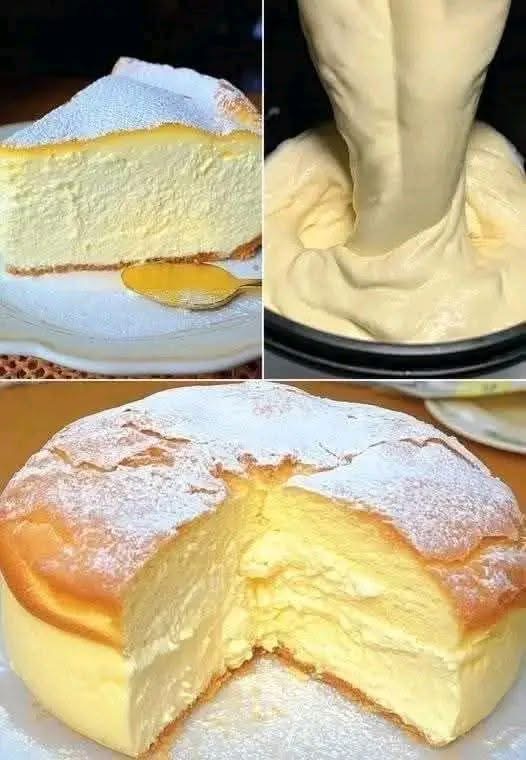
Japanese Fluffy Soufflé Cheesecake (Cotton Cheesecake)
1. Introduction
The image showcases a showstopping Japanese Soufflé Cheesecake (also known as Cotton Cheesecake or Japanese Jiggly Cake). Famous for its incredibly light, cloud-like texture, airy jiggle, and delicate golden top lightly dusted with powdered sugar, this dessert combines the tangy richness of traditional Western cheesecake with the ultra-fluffy sponge technique of European soufflés.
2. History & Formation
History: Developed in Hakata, Japan, in the late 1960s by chef Tomotaro Kuzuno, Japanese soufflé cheesecake was inspired by a traditional German Käsekuchen (a lighter cheese cake) he tasted during a trip to Berlin. By combining cream cheese with egg whites whipped into soft meringues, Japanese bakers created a iconic dessert that quickly achieved global fame.
Formation (The Science):
Meringue Structure: Whipping egg whites traps thousands of tiny air bubbles. When baked, the air inside these bubbles expands, causing the cheesecake to rise tall like a soufflé without using heavy baking powder.
Emulsification & Steam Baking: Cream cheese and egg yolks are emulsified with milk and butter into a velvety base. Baking the cake in a hot water bath (bain-marie) keeps the oven air humid, distributing heat evenly so the cake rises gently without cracking or drying out.
3. Ingredients
To make one 8-inch round soufflé cheesecake (8–10 servings):
Cream Cheese Base
Cream Cheese: 8 oz / 225g (softened at room temperature)
Unsalted Butter: 3 tablespoons / 45g
Whole Milk: \frac{1}{3} cup / 80ml
Egg Yolks: 6 large (separated)
All-Purpose Flour or Cake Flour: \frac{1}{3} cup / 45g (sifted)
Cornstarch: 2 tablespoons / 20g (sifted)
Vanilla Extract: 1 teaspoon
Lemon Juice: 1 tablespoon (adds brightness and stability)
Whipped Meringue
Egg Whites: 6 large (chilled)
Granulated Sugar: \frac{1}{2} cup / 100g
Cream of Tartar: \frac{1}{4} teaspoon (or 1 tsp lemon juice)
Garnish
Powdered Sugar: For dusting
4. Methods & Baking Instructions
Equipment Needed
8-inch round cake pan (preferably with a solid bottom)
Parchment paper
Hand mixer or stand mixer
Large roasting pan (for the hot water bath)
Step-by-Step Instructions
1. Prep the Pan & Oven: Preheat oven to 300^\circ\text{F} (150^\circ\text{C}). Grease an 8-inch round cake pan and line both the bottom and sides with parchment paper (let the side parchment extend 2 inches above the rim). Wrap the outside of the pan in double-layer heavy-duty aluminum foil to prevent water leakage.
2. Make the Cheese Base: In a heatproof bowl set over a pot of simmering water (double boiler), melt the cream cheese, butter, and milk together, whisking until completely smooth. Remove from heat and allow to cool slightly.
3. Whisk Egg Yolks & Dry Ingredients: Whisk the egg yolks, vanilla, and lemon juice into the cream cheese mixture until smooth. Sift in the flour and cornstarch, whisking gently until no lumps remain.
4. Whip the Meringue: In a clean, dry glass or metal bowl, beat the chilled egg whites with cream of tartar until frothy. Gradually add granulated sugar in three parts, beating on medium speed until soft peaks form (the peaks should gently droop when you lift the beaters—avoid stiff peaks to prevent cracking).
5. Fold Batter Gently: Fold \frac{1}{3} of the meringue into the cheese mixture using a silicone spatula to loosen it. Carefully fold in the remaining meringue in two batches using gentle, sweeping figure-8 motions to preserve the trapped air.
6. Set up the Water Bath: Pour the silky batter into the prepared pan. Tap the pan gently on the counter twice to release large air bubbles. Place the cake pan inside a larger roasting tray and pour hot (not boiling) water into the roasting pan until it reaches halfway up the cake pan side.
7. Bake Low & Slow: Bake at 300^\circ\text{F} (150^\circ\text{C}) for 60 minutes, then reduce temperature to 230^\circ\text{F} (110^\circ\text{C}) and bake for another 20 minutes until the top is golden and slightly set.
8. Cool Slowly: Turn off the oven and prop the oven door open slightly with a wooden spoon. Let the cake rest inside for 30 minutes to cool gradually and prevent sudden collapsing.
9. Serve: Unmold gently onto a plate, peel off parchment paper, and dust generously with powdered sugar. Serve warm for maximum jiggliness or chilled for a creamier texture!
5. Alternative Baking Methods
Steam-Bake Rice Cooker Method: Some modern rice cookers with a “Cake” setting can bake Japanese cheesecake directly in the inner pot! Simply pour the batter in and run 1–2 cake cycles.
Basque Burnt Cheesecake Hybrid Method: For a caramelized twist, bake at higher temperatures without a water bath to achieve a dark, caramelized top while maintaining a soft, molten center.
6. Dessert & Baking Lovers
This airy delicacy is a favorite for:
Japanese Dessert & Tea Lovers: Complements matcha green tea, specialty coffees, and light herbal teas beautifully.
Fluffy & Melt-in-Your-Mouth Dessert Lovers: Perfect for anyone who prefers delicate, low-sweetness, cloud-like pastries over heavy, dense Western cakes.
Home Bakers & Cake Crafters: An exciting culinary project that rewards precision, gentle folding techniques, and patience.
7. Conclusion
Japanese Soufflé Cheesecake is the ultimate fusion of delicate French baking techniques and rich cream cheese flavors. Light as air, beautifully golden, and deliciously tender, it makes an unforgettable centerpiece for celebrations or tea time. Enjoy it fresh, or keep it refrigerated in a covered container for up to 3–4 days!